
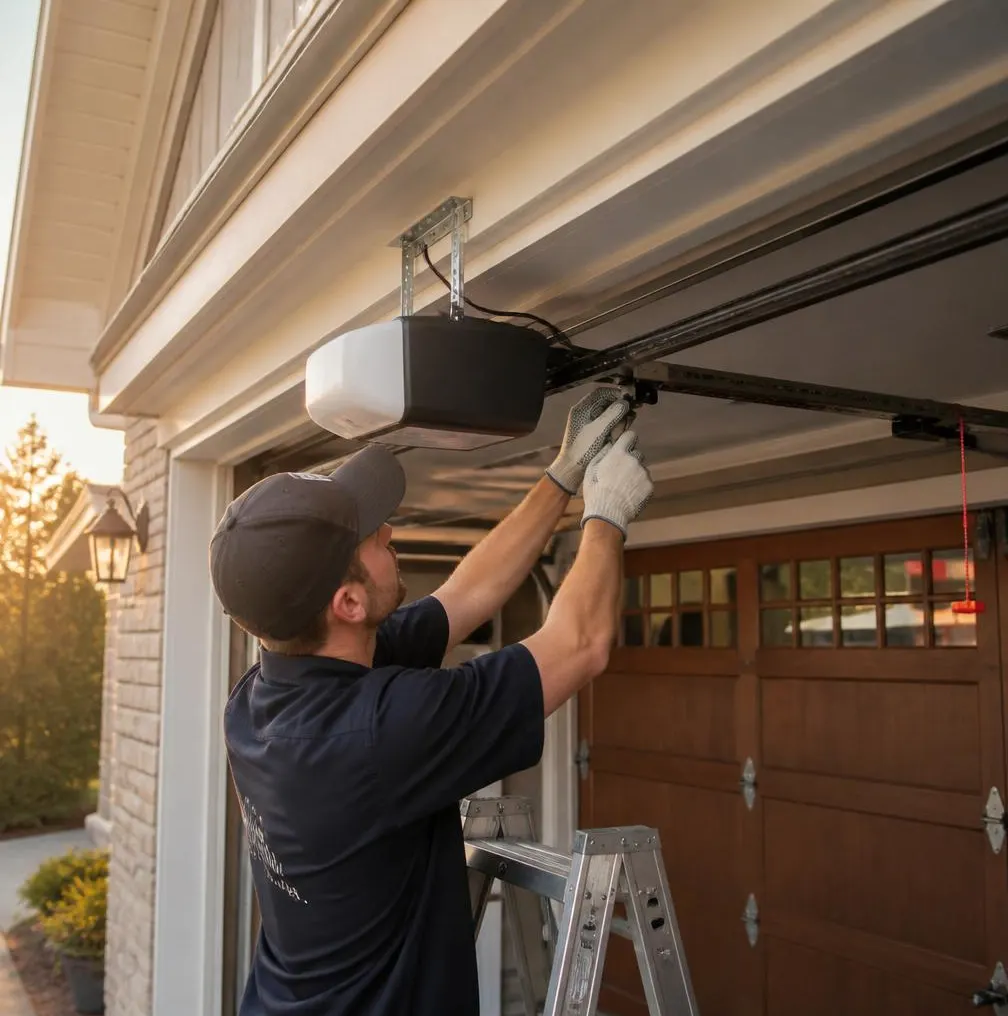
Short answer: yes, you probably need it, and here's why
If one of you is arguing that battery backup is a gimmick and the other is arguing it's non-negotiable, the second person is closer to right. A battery backup on a garage door opener is a small rechargeable battery built into (or added to) the opener unit that keeps the door working for a limited number of cycles when the power goes out. It's not required everywhere, and not every opener has one, but in a part of Florida where summer storms knock out power on a regular basis, it stops being a luxury feature and starts being basic preparedness.
How it actually works
Modern openers with battery backup — this is standard on many mid-range and higher LiftMaster, Chamberlain, and Genie models — have a battery pack that sits quietly trickle-charging off your household power. When the power cuts out, the opener automatically switches over to the battery. You won't notice anything different except that the door still opens and closes with the remote or wall button.
The catch is capacity. Battery backup is built for a handful of cycles, not indefinite use. Most units are rated for something like 10–20 open/close cycles before the battery needs to recharge, which it does once power is restored. So it's designed to get you in and out a few times during an outage — not to run your garage door for a three-day stretch with no power at all.
What it does not do
- It does not power garage lights, outlets, or anything else in the garage.
- It does not protect the door itself from wind damage — that's a separate issue tied to the door's wind-load rating, not the opener.
- It does not last forever once engaged. If the outage runs long and someone uses the door repeatedly, the battery will drain and you'll be back to manual operation (pulling the red release cord and lifting the door by hand).
When is it actually required?
This is where the argument usually starts, and the honest answer is: it depends on the situation, not on a blanket rule. Building codes in many jurisdictions now call for battery backup on new garage door opener installations specifically when the garage door functions as a primary means of entry or exit from the home — the idea being that if the power is out and that's your main way in or out, you shouldn't be locked out of your own house. Manufacturers have also started including it standard on many newer models regardless of code, simply because outages are so common nationwide.
If you're installing a brand-new opener, it's worth asking directly whether the model includes battery backup and whether it's expected for your situation — code requirements and best practice aren't always the same thing, and it's better to know before the unit is on the ceiling.
Why this matters more here than in a lot of places
Citrus County doesn't get a mild, occasional outage now and then — it gets hurricane season. Afternoon downpours and storm systems routinely knock out power for hours, sometimes longer, and that's exactly the moment a homeowner discovers whether their opener has backup or not. Without it, a power outage during a storm means manually releasing the trolley and lifting a door that may weigh well over a hundred pounds, in the dark, in the rain, possibly while trying to get a car out ahead of worsening weather. With battery backup, you get a few clean cycles to move vehicles or close up before the storm gets bad — no fumbling with the release cord.
There's also a humidity angle worth knowing. Batteries don't love heat and moisture any more than the rest of your garage hardware does. In a garage that runs hot and humid for most of the year, backup batteries tend to degrade faster than the manufacturer's optimistic estimates suggest. A battery that worked fine last hurricane season can be dead weight this one if it hasn't been tested.
How to check what you've got
- Look at the opener unit itself — battery backup models usually have a visible battery compartment and an indicator light.
- Pull the power cord during a calm moment (not during a storm) and try the opener. If it still runs, you have backup and it's charged. If it doesn't, either you don't have the feature or the battery's dead.
- Check the age of the unit. Openers more than 8–10 years old often predate battery backup being standard equipment.
When to call Inverness Overhead Door Co
If you've tested your opener and found there's no backup, or the battery won't hold a charge anymore, that's a straightforward fix — not a full system overhaul. We handle Garage Door Opener Installation for homeowners who want to upgrade to a battery-backup model before storm season catches them off guard, and we include battery and opener function checks as part of our Garage Door Maintenance & Tune-Up service, so you're not guessing whether it'll actually work when the power drops.
If you're in Inverness, Lecanto, Hernando, Crystal River, Homosassa, Floral City, Beverly Hills, or Citrus Springs and want a straight answer on whether your opener is storm-ready, give us a call. We're right on US-41 in Inverness and can usually get a technician out fast.